Authoritarian Governance
Entrenched lifetime presidencies, hereditary succession plans, and permanent emergency laws suspended constitutional checks and balances.
A region transformed. A revolution of expectations. A struggle over the future.
Beneath decades of apparent regime stability lay deepening institutional decay. Swing open the hinged 3D Authoritarian Social Contract vault below and inspect the seven interlocking pressures that shattered it.
Crony welfare exchanged for political obedience.
Security apparatus deterring collective dissent.
Entrenched lifetime presidencies, hereditary succession plans, and permanent emergency laws suspended constitutional checks and balances.
Pervasive internal security agencies (mukhabarat), censorship, and arbitrary detention silenced opposition movements and independent journalism.
State privatization enriched ruling families and crony networks while public institutions and municipal services deteriorated.
A rapidly expanding, educated youth population faced acute joblessness, rising food prices, and blocked economic mobility.
Stark divides separated affluent coastal capitals from neglected interior provinces such as Tunisia’s Sidi Bouzid and Syria’s Daraa.
Managed multi-party facades and rigged elections denied citizens meaningful representation or peaceful avenues for reform.
Beyond material grievances, protesters united around “Bread, Freedom, Social Justice, and Human Dignity”—rejecting everyday state humiliation and demanding popular sovereignty.
Click any highlighted state, switch between 3D Relief and Top-Down Atlas views, or scrub the Contagion Wave slider to watch protests spread across the region.
Beginning in Tunisia in December 2010, mass demonstrations spread rapidly across North Africa and the Levant. Yet variations in state institutions, military cohesion, and foreign intervention produced starkly different outcomes.
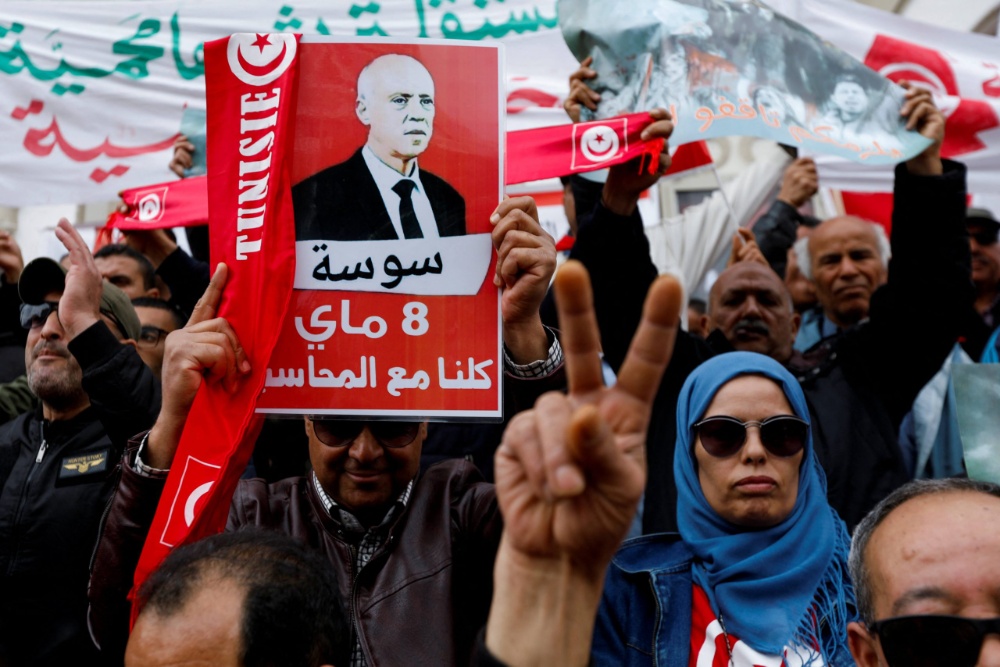
Tunisian citizens holding placards demanding accountability (كلنا مع المحاسبة) and democratic reform.
Triggered by street vendor Mohamed Bouazizi’s self-immolation in Sidi Bouzid on December 17, 2010, demonstrations over unemployment and police humiliation spread to Tunis. Crucially, the professional Tunisian military refused to fire on protesters, compelling President Zine El Abidine Ben Ali to flee into exile on January 14, 2011 after 23 years in power.
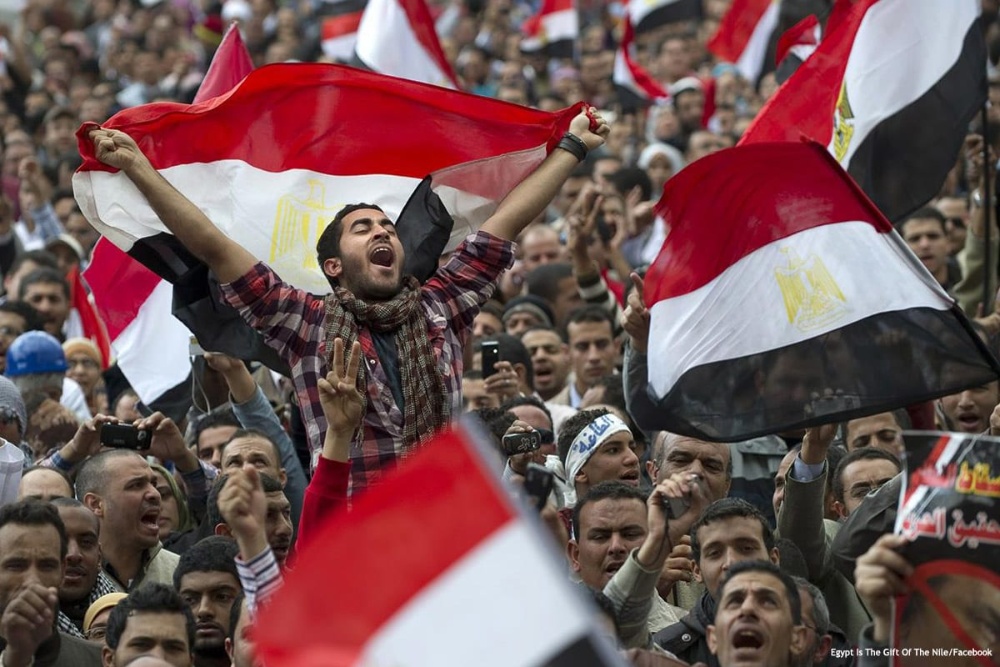
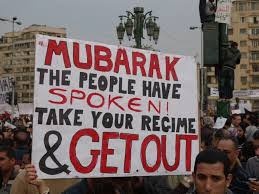
Inspired by Tunisia, millions converged on Cairo’s Tahrir Square starting January 25, 2011, protesting emergency laws, police brutality, and three decades of rule under Hosni Mubarak. After 18 days of mass sit-ins, the Supreme Council of the Armed Forces (SCAF) pressured Mubarak to resign on February 11, 2011, initiating a turbulent transition marked by electoral polarization and subsequent military intervention in 2013.
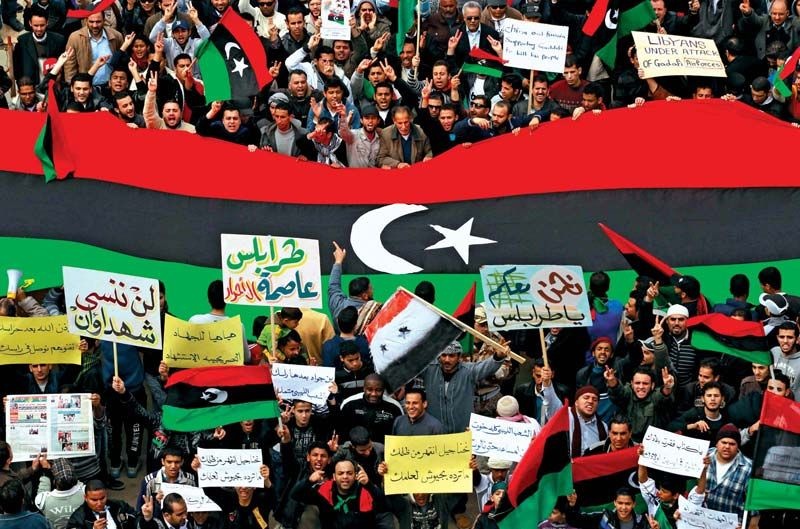
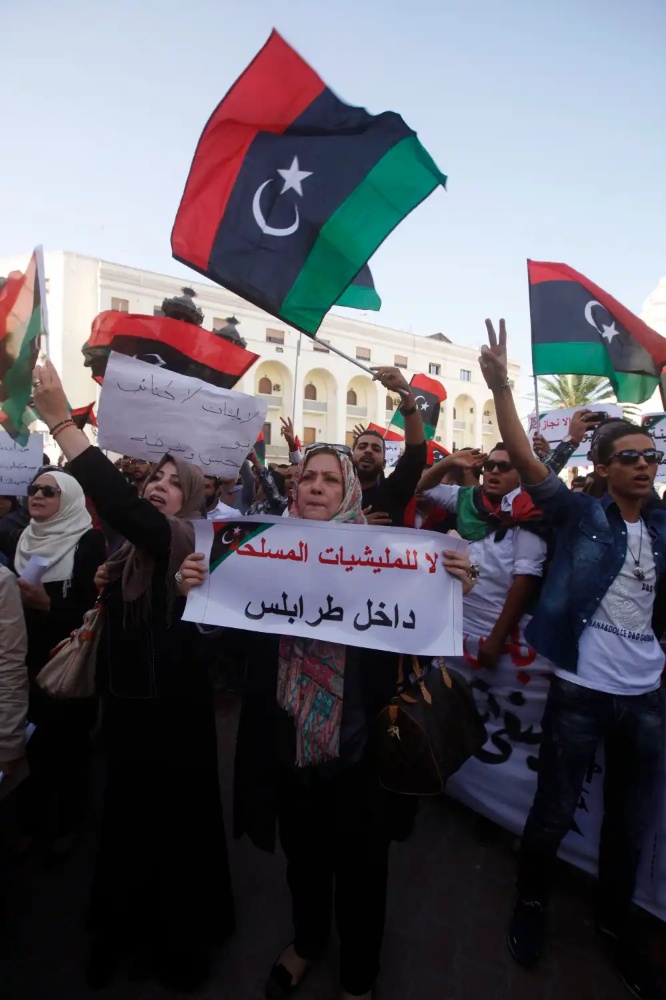
Protests erupting in Benghazi in February 2011 met immediate lethal force from Muammar Gaddafi’s 42-year jamahiriya regime. Lacking independent national institutions, the uprising escalated into armed rebellion. Following UN Security Council Resolution 1973 and NATO air intervention, rebel forces captured Tripoli and killed Gaddafi in October 2011—leaving fractured militia authority and enduring political instability.
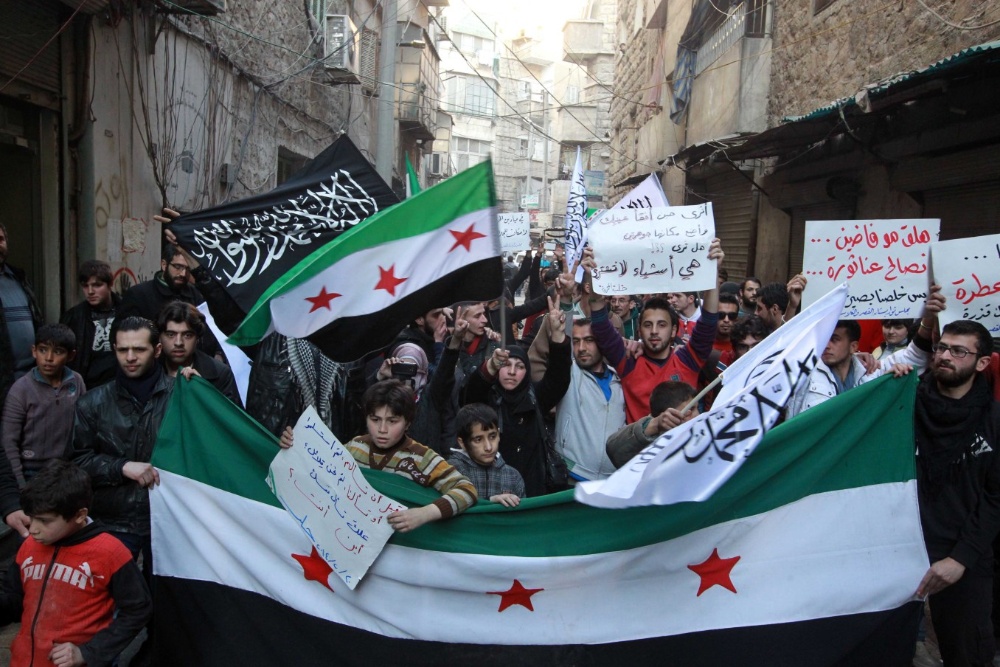
Peaceful demonstrations sparked in Daraa in March 2011 over the arrest of teenagers were met with uncompromising military siege by President Bashar al-Assad’s Ba’athist state. Tightly loyalist elite military divisions held together, driving defectors into armed insurgency and transforming a civic protest movement into a devastating, internationalized multi-sided civil war and humanitarian catastrophe.
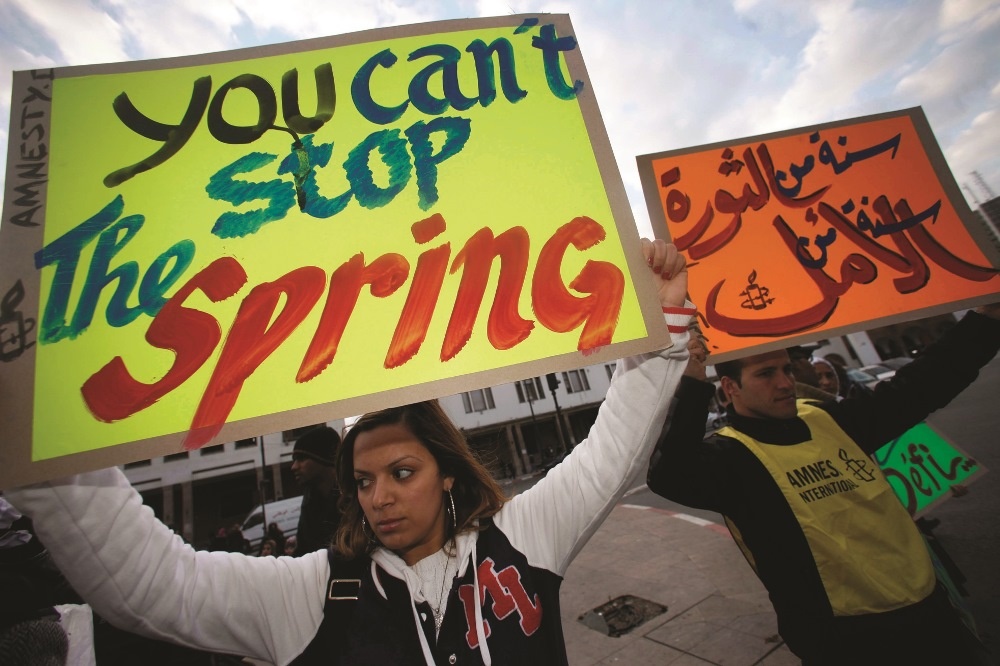
Demonstrators carrying the three-starred Syrian independence banner and handwritten slogans.
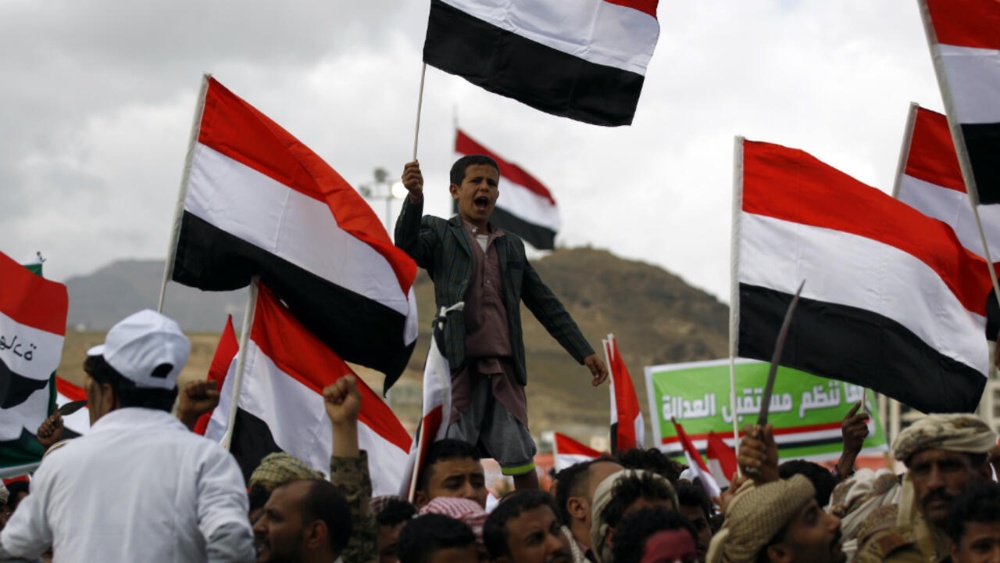
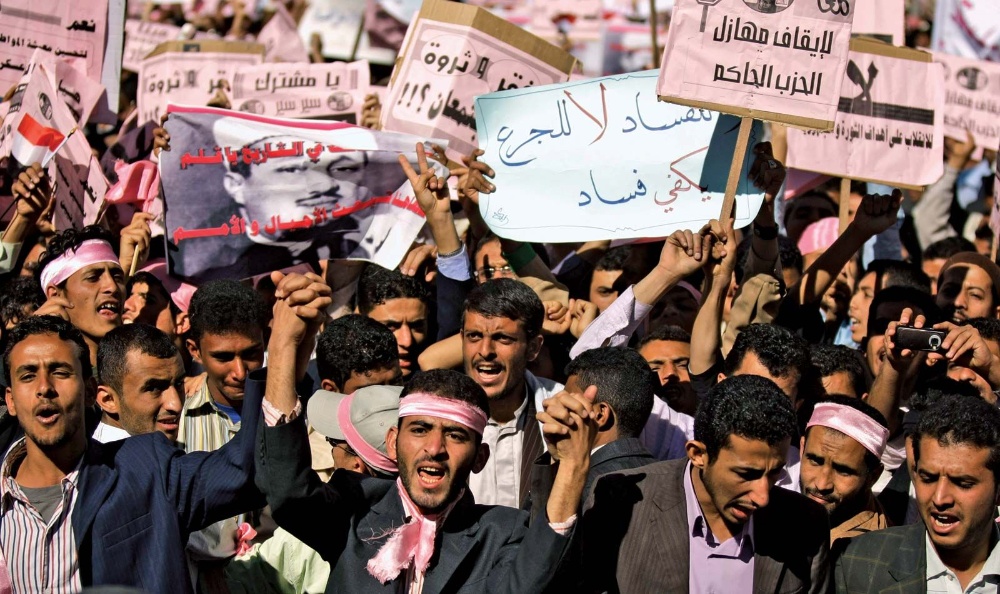
Youth-led sit-ins at Sana’a University’s Change Square demanded the departure of President Ali Abdullah Saleh after 33 years in office. Following military defections and a Gulf Cooperation Council (GCC) diplomatic initiative, Saleh transferred formal power to Vice President Abdrabbuh Mansur Hadi in February 2012—yet unresolved tribal, southern, and Houthi divisions soon plunged the country into renewed conflict.
Shared grievances created a powerful demonstration effect across borders: watching Ben Ali fall in Tunisia shattered the psychological barrier of fear from Cairo to Sana’a. Yet identical slogans collided with vastly different state structures.
Shared Grievances, Distinct Institutions
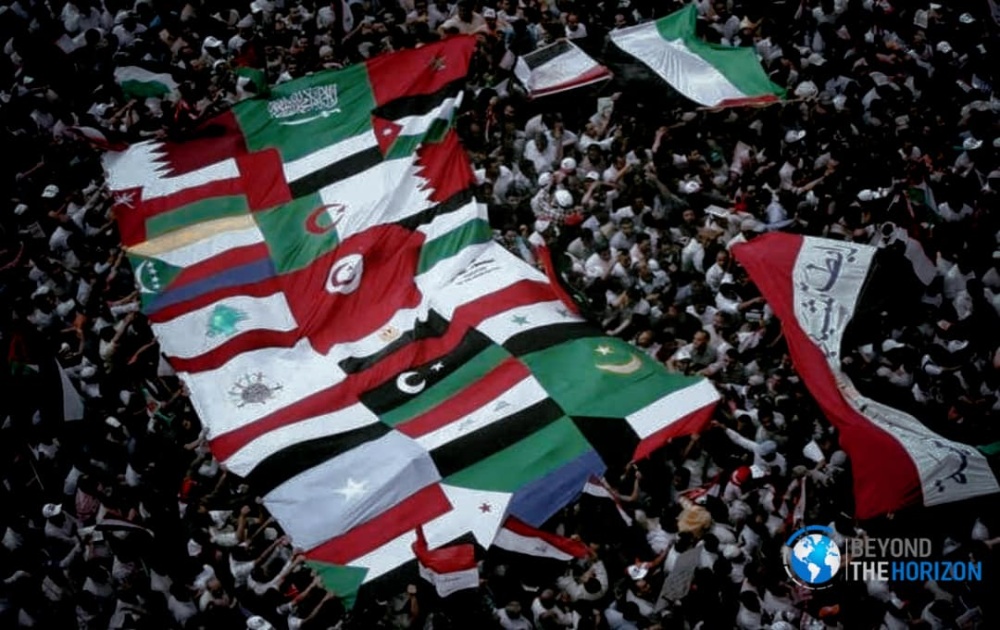
Citizens stitched together national flags in solidarity, echoing “Ash-shaʻb yurīd isqāṭ an-niẓām” (“The people want the fall of the regime”).
Ben Ali’s flight on Jan 14, 2011 proved entrenched autocrats were not invincible—triggering Egypt’s Jan 25 Police Day mobilization eleven days later.
Social media platforms did not cause the Arab Spring—deep structural grievances did. However, mobile phones, citizen journalism, and satellite television shattered state censorship and compressed the speed of mass coordination.
Click any glowing star-node in the constellation to trace how smartphones, satellite channels, and offline unions linked into a single mobilizing network—or build your own constellation path!
Filter by state, step through milestones, or run the Auto-Tour to watch cumulative regional shifts.
Following municipal confiscation of his produce cart and public humiliation, 26-year-old vendor Mohamed Bouazizi sets himself alight outside the provincial governorate in Sidi Bouzid. Local demonstrations rapidly expand into a nationwide revolt uniting students, lawyers, and trade unionists.
Highlight any variable column in the comparative matrix, or test your own structural combination in the Causal Outcome Predictor below.
| State | Political Transition | Military Involvement | Institutional Stability | Foreign Intervention | Conflict & Democratic Trajectory |
|---|---|---|---|---|---|
| Tunisia | Constituent Assembly & pluralist coalition bargaining | Small, professional, non-praetorian military stayed neutral | Strong civil society & UGTT labor mediation preserved state | Minimal external military interference | Multi-party constitutional democracy amid socio-economic strain |
| Egypt | Mubarak ousted; brief Morsi presidency followed by 2013 takeover | Entrenched military-economic complex acted as political arbiter | Centralized state bureaucracy remained intact throughout | Significant regional diplomatic & financial alignment | High state continuity with restored authoritarian governance |
| Libya | Total overthrow of Gaddafi’s 42-year jamahiriya system | National army fractured along regional and tribal lines | Severe institutional vacuum; weak centralized bureaucracy | UNSCR 1973 & NATO air campaign decisive in regime fall | Competing administrations, militia rule, and recurring civil conflict |
| Syria | Blocked; regime retained Damascus and core coastal territories | Elite security units remained cohesive and fiercely loyal | Sovereignty fragmented across regime and opposition zones | Extensive regional and international proxy involvement | Protracted multi-sided civil war and severe humanitarian crisis |
| Yemen | GCC-brokered handover from Saleh to Vice President Hadi (2012) | Armed forces split between rival political and tribal commanders | Fragile state capacity challenged by Houthi & southern movements | Gulf mediation followed by regional military escalation | Breakdown of National Dialogue into prolonged civil war |
When a non-praetorian army refuses to fire on civilians and dense civil society unions (UGTT) mediate bargaining without foreign military escalation, peaceful constitutional transition becomes viable.
Even where democratic transitions stalled or descended into conflict, the uprisings of 2010–2012 permanently altered political consciousness across the Middle East and North Africa.
Rejection of daily state humiliation, police impunity, and arbitrary authority—uniting middle-class professionals and informal workers beyond purely economic grievances.
Professional militaries (Tunisia) remain subordinate to civilian transition, whereas praetorian or patrimonial armies (Egypt, Syria) intervene to protect corporate or regime privileges.
How successful mass mobilization in one state (Tunisia) updates citizens’ beliefs about regime vulnerability in neighboring states (Egypt, Yemen, Libya, Syria).
The capacity of entrenched regimes to survive or re-consolidate power through coercive loyalty, oil rents, sectarian polarization, or counter-revolutionary alliances.